





Hay fever
Hay fever is a seasonal allergy to pollen. Planning treatment before symptoms become severe can help you manage the pollen season.
What is this condition?
Hay fever is a seasonal allergy to pollen. Planning treatment before symptoms become severe can help you manage the pollen season.
Main symptoms
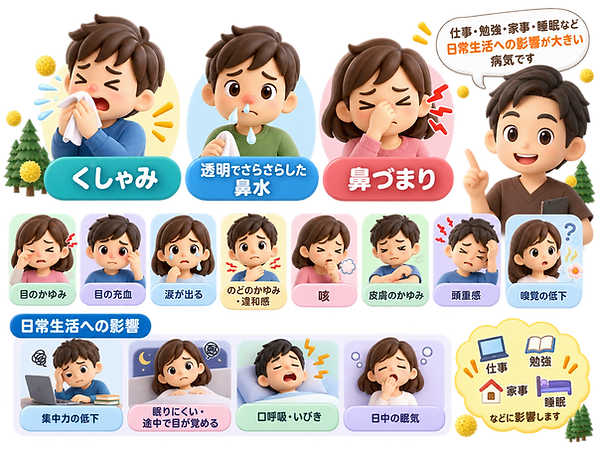
Sneezing, a runny or blocked nose, and itchy or watery eyes.
Causes
The relevant pollen and season vary. In Japan, cedar and cypress are common spring triggers; grasses and other plants can also cause symptoms.
When to see a clinician
Seek advice if congestion prevents sleep, usual medicines are ineffective, or symptoms affect daily activities. Fever or substantial facial pain may suggest another problem.
Examination and tests
We review the seasonal pattern, previous treatment and nasal findings. Allergy testing may be considered when needed to guide care.
Tests are selected according to your symptoms and examination. Specialist tests or procedures may require referral.
Treatment
Antihistamines and steroid nasal sprays are selected according to symptoms and concerns such as drowsiness. Treatment timing and, in selected cedar allergy, immunotherapy can be discussed.
These are general treatment options. Your clinician will discuss which approach fits your condition; not every treatment described is provided at this clinic.
What you can do at home
Check local pollen information, reduce pollen carried indoors, and use a mask or glasses when helpful. Bring details of medicines you have already tried.
Frequently asked questions
Do I need an allergy test every year?
Not necessarily. Previous results, changes in symptoms and the treatment plan determine whether another test is useful.
What should I tell the clinician?
Tell us when symptoms began, whether they are changing, your medicines and allergies, and any relevant medical conditions. For a child, describe changes in feeding, sleep or response to sound.
Can I start sublingual immunotherapy here?
Honda ENT Clinic does not provide sublingual immunotherapy. During outpatient consultations, we explain what the treatment involves, who may be eligible, its expected benefits and precautions.
Related symptoms and conditions
Visiting Honda ENT Clinic
Check temporary changes
| Day | Morning | Afternoon |
|---|---|---|
| Mon / Tue / Wed / Fri | 9:00–12:30 | 15:00–18:20 |
| Saturday | 9:00–11:00 | 14:00–16:00 |
| Closed | Thursday, Sunday and public holidays | |
Reception opens 15 minutes before each session. Walk-ins are welcome for general consultations. Vaccinations may require an appointment.
Please call before visiting if you have a fever of 37.5°C or higher, a recent positive infection test, a household member with an infection, or would like infection testing. The waiting-time service is in Japanese.
Schedules can change. Check clinic news or call before travelling.
About this information and references
This information is published by Honda ENT Clinic and is intended as general guidance. Individual diagnosis and treatment require a clinical assessment. Updated: 15 October 2026.
About Medical Director Dr. Yusuke Honda